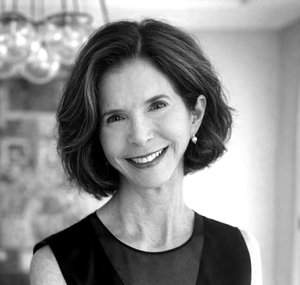
A force of nature whose legacy still unites communities
Lois D. Cohen is an icon. I use present tense intentionally, because the essence of what she strived for during her lifetime lives on – and is needed today more than ever. Lois was not a sports star, pop guru or movie legend. She did, however, master an incredible yet simple skill: getting people to talk with one another, without division and toward a common goal.
When the DJC launched its Women of Vision awards in 2014, Lois was honored as its first Woman of the Year. Over a decade later, the DJC continues celebrating women shaping the built environment in a tradition Lois helped pioneer through her leadership and spirit of connection.
I had the privilege of meeting with Lois’ son, Storm Siegel, and Kristen Bishop, who worked with Lois, to learn more about who she was beyond her public achievements. Both described her as “a force of nature” – a larger-than-life personality whose warmth, honesty and authenticity drew people in.
Storm described his mother as “a people person” who “didn’t take no for an answer, but built relationships through optimism, honesty and humor.” Two only children, Lois and Storm were very close. Storm reminisced, “We always aimed for one big belly laugh a day.”
Kristen remembered Lois as larger than life. “Unlike many with that kind of presence, she was pure-hearted, bluntly honest and deeply genuine,” Kristen told me.
The reflections of both Storm and Kristen reveal a woman whose presence could fill a room, yet whose generosity, commitment to mentorship and belief in the power of conversation brought people together and fostered progress.
Lois was a pioneer in the art of community engagement and consensus. She built her career on getting disparate groups to work together by being active participants in the community impacts of planned infrastructure projects. These included replacing an aging bridge or creating urban pathways for people who don’t use a motorized vehicle to get around. As Kristen recalled, “People were drawn to her because she was a straight shooter and a strong advocate who kept them informed.”
Kristen shared that Lois was profoundly committed to ensuring every person affected by a project had a voice – no matter who they were, where they lived, or whether they had previously engaged in civic processes. Her dedication to people went beyond the bounds of her professional work.
“If someone didn’t think they should care about a project, Lois would tell them why they should,” Kristen said. “If they couldn’t make it to an open house or community meeting, she would show up at their home.
“She loved the challenge of speaking with those who opposed her projects and, invariably, she would win them over through genuine attention and prioritization of their concerns,” she recalled. “Her gift for connection reached across every demographic and perspective, but she held a special place in her heart for those whose voices often went unheard.”
A native New Yorker, Lois came by her persuasive demeanor naturally. She began her career in the 1970s as a political liaison for the Jewish community, representing New York City, Puerto Rico and the U.S. Virgin Islands. During that time, she also worked with Robert F. Kennedy and later Jimmy Carter’s presidential campaign – experiences that deepened her passion for advocacy and public service. Her political work led to a position with the U.S. Department of Transportation during Carter’s administration.
Following her time in Washington, former USDOT Secretary Neil Goldschmidt – arguably the era’s most influential leader in Oregon politics – urged Lois to relocate to Portland. Although well-established in the East Coast’s business and political circles, Lois accepted the challenge. While perhaps not a milestone now, such a move by a woman in business in the 1970s was a game-changer.
With an innate ability to connect authentically with people, Lois quickly immersed herself in the Oregon business community. Then, in 2008, she formed Lois D. Cohen Associates (LCA), an early adopter of the philosophy that civic and government entities need broad participation when community members are impacted by public projects.
Her civic-minded approach left lasting physical and social marks in Oregon communities. With her ability to weave storytelling and relationship-building into infrastructure and civic work, Lois brought people together for the greater good. She advocated for marginalized voices at a time when few women held similar positions of power, and her work left an imprint that continues to shape communities for generations to come.
Lois’ work on the Sellwood Bridge replacement exemplified this. She was especially proud of the involvement she inspired among students, seeing them as future community leaders.
“She loved that project,” Storm recalled. “It showed exactly who she was – someone who believed everyone should have a voice.”
But it wasn’t just about big projects. Lois especially loved small-town engagement because it was so personal. One of her favorite accomplishments was in the town of Elkton, which in the 2010 census had a population of just 195. Lois helped the community come together to agree on a bridge project. Storm recalled joining her on a road trip through Oregon that she intentionally rerouted to include a stop there. “Everyone we saw in town knew her,” he said. “It was one of those moments that showed how much her work really mattered to people.”
Storm shared that Lois made relationships with her whole heart, cultivating cross-generational ties that went beyond the bounds of business.
“As she got older, she loved mentoring, especially younger women in the field,” Storm said. “Professional relationships often turned into real friendships. Years after projects ended, she was still on the phone with people just to catch up.”
When Lois became ill, those blurred lines between work and friendship came full circle. Storm shared, “When Mom was sick, so many people came through to visit her. These were people she’d worked with over the years, but they weren’t just colleagues anymore – they were friends.” He reflected that his mother “found real joy in what she did,” and that her work and personal life were “so intertwined because she cared so deeply about people.”
Kristen emphasized that Lois holds a special place in her heart.
As we look toward this year’s Women of Vision Awards on Oct. 23, Lois’ legacy continues to shape the spirit of the event and the community it celebrates. The values she championed – empathy, collaboration and connection – remain as vital today as when she first helped inspire this tradition. Her example reminds us that lasting leadership is grounded in integrity and kindness. Lois’ legacy invites all of us, especially women in business, to lead with conviction and compassion, to lift one another up and to keep humanity at the center of our work.
Originally published October 16, 2025 in DJC Oregon leading up to the publication’s “Women of Vision” awards event.